
April 15, 2026
From Laps to Labs: The Hidden Science of MIT’s Pools
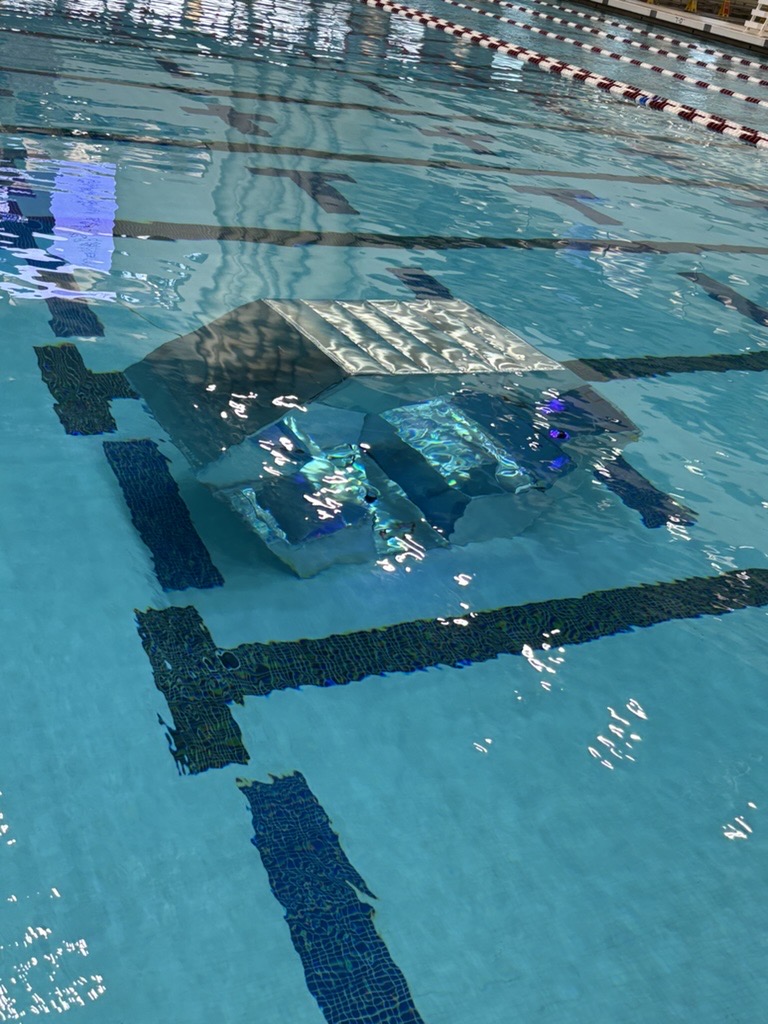
Our pools host swimmers and science experiments alike!
By Abby Brady
Aquatics Coordinator
The philosophies, teachings, and values of MIT are literally everywhere on campus.
When most people think of Aquatics at MIT Recreation they think of lap swimming, swim lessons, lifeguards on deck, and yes, even a swim meet or two. But what many don’t realize is that our pools have another important purpose on campus. All four of them serve as additional laboratory/research space for students and faculty. To the naked eye, these spaces are just a pool, to others, they represent any number of different ecosystems.
Like many MIT innovations from students and faculty, they think outside of the box so why wouldn’t it be different with research/lab space? Our aquatic facilities provide a unique, controlled environment where students, graduate researchers, professors, and classes can test and develop projects that require water-based experimentation. From engineering prototypes to biomechanics studies, the pool becomes a living and dynamic testing ground. 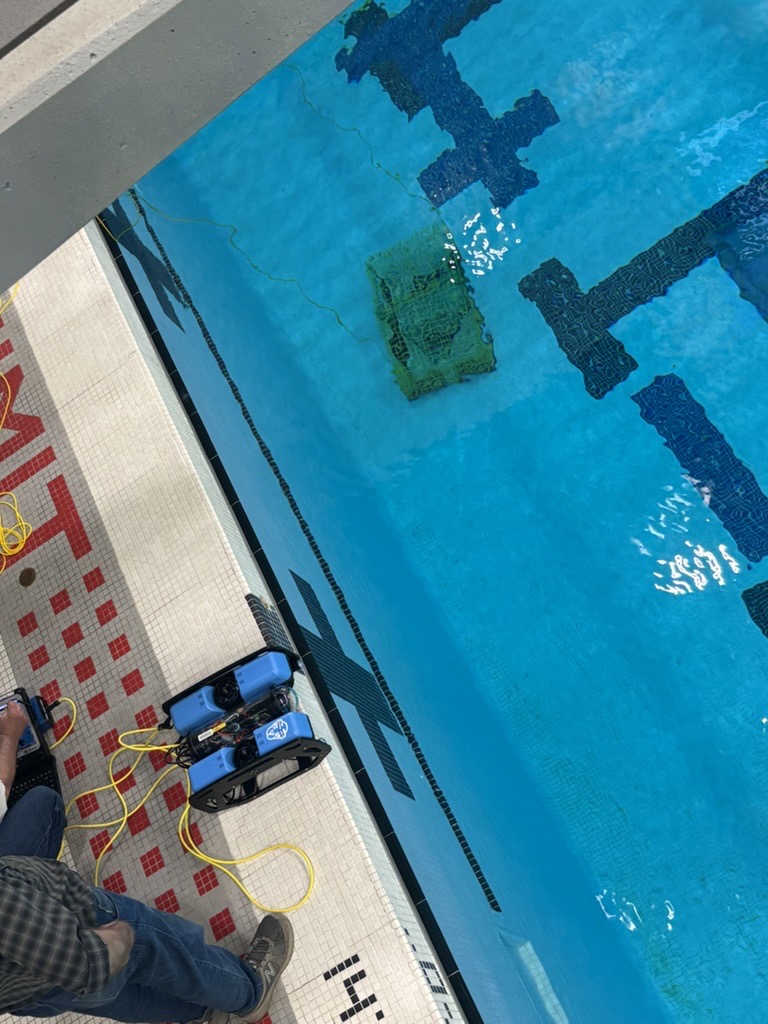
Students are able to reserve pool space at our facility to conduct sponsored research in a controlled setting without the unpredictability of open water. This eliminates the risk of current, weather and environmental factors that open water might have and the project might not yet be able to handle. Additionally, the pool space gives researchers a year-round facility to work out of in spite of New England’s ever-unpredictable weather.
Over the years our pool space has supported a wide range of projects that includes underwater robotic testing to human performance analysis. The controlled depth, temperature and accessibility to our spaces allow researchers to focus on refining their work. In fiscal year 2025 alone, we were able to accommodate 19 different MIT affiliate research groups between our two facilities. Don’t take Recreation’s word for it, let’s hear from some of the researchers diving for data.
“MIT Recreation’s pool has been an invaluable testing ground for my lab’s research on underwater robots,” said Emily Sologuren, a computer science researcher. “Having access to a controlled aquatic environment on campus lets us rapidly iterate on our robot’s swimming locomotion and underwater vision systems before deploying in open field sites. It’s a unique resource that bridges the gap between lab bench and the ocean by allowing essential iterative prototyping and testing,” she added.
“The MIT Recreation pool has been an invaluable space for our underwater robot localization research,” said Weitung Chen, an EECS PhD supervised by Prof. Fadel Adib, working on underwater robot localization research. “The facility’s layout allows us to easily set up visual markers along the edge to establish ground truth, but the real advantage is the 14-foot depth. Unlike standard experimental water tanks, this depth reduces acoustic multipath interference, allowing us to test our acoustic localization methods with less interference,” he added.
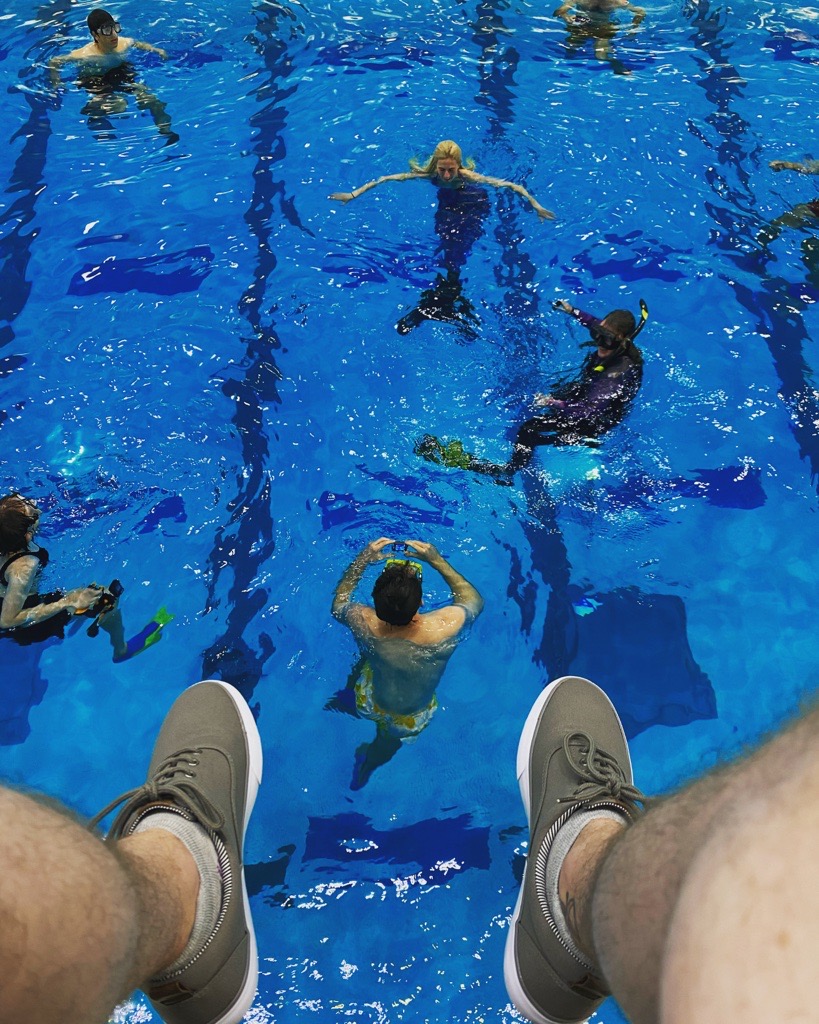 This relationship between aquatics and research reflects what makes MIT unique. Spaces across campus are adaptable, interdisciplinary, and designed to support exploration in all forms. It’s a living example of MIT’s motto, Mens et Manus—“mind and hand” where ideas move beyond theory and into practice. The Aquatics Department is proud to play a role in that mission, not just by promoting wellness and recreation, but by supporting academic discovery and innovation.
So the next time you walk onto the pool deck, remember: it’s not just a place for laps and lessons, it might also be the testing ground for the next scientific breakthrough.
BACK TO ALL
Comments
There aren't currently any comments on this blog entry.