
February 23, 2026
What Goes Into Lifeguard Training?
By Abby Brady
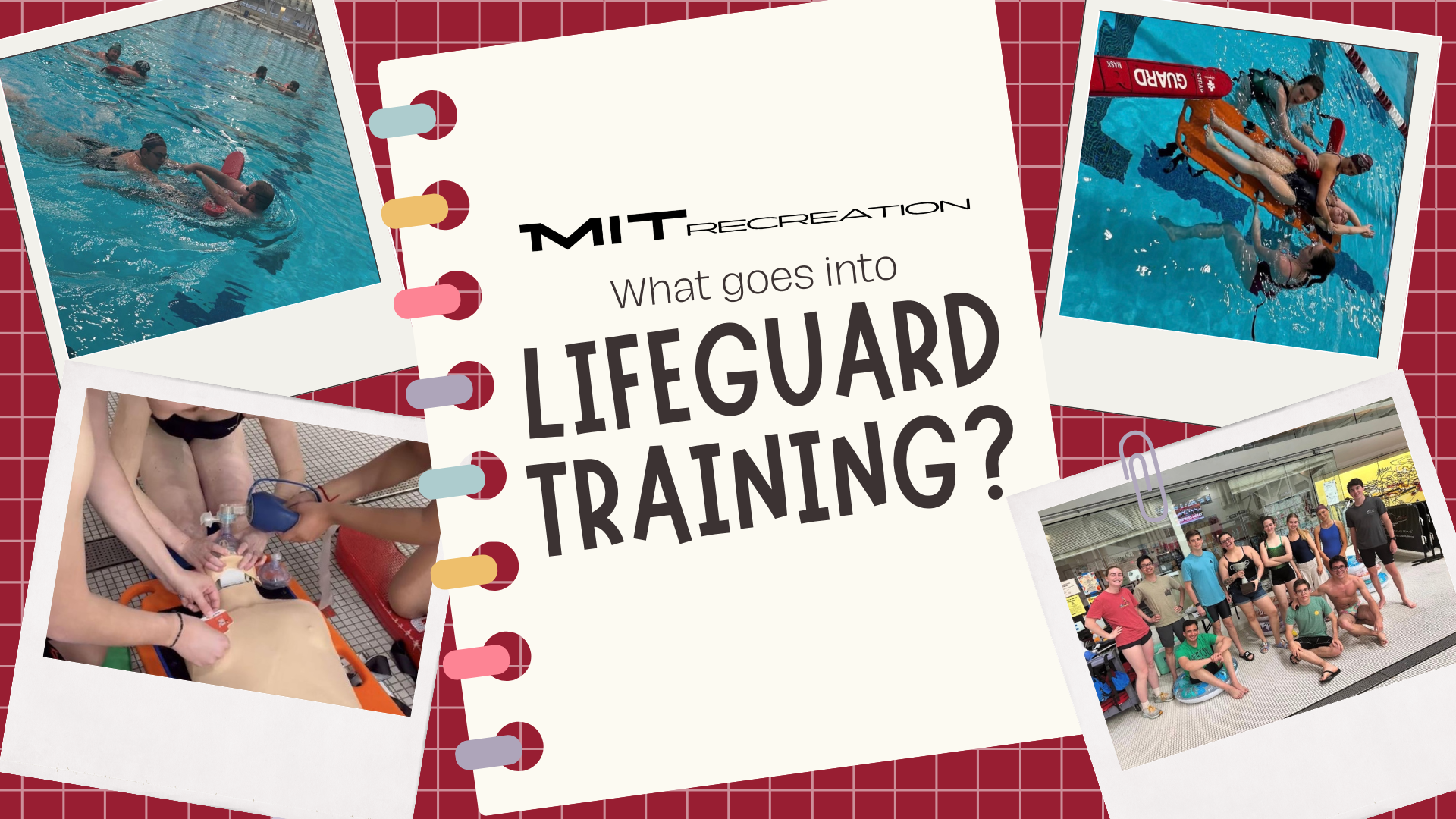
Ever walk onto the pool deck and see a group of lifeguards suddenly jumping into the water, strapping someone to a backboard, or performing CPR on a manikin and wonder what on earth is going on?
Don’t worry, it’s not an emergency. It’s just training.
Here at MIT, our lifeguards participate in monthly in-service training opportunities to review their skills, practice emergency scenarios, and continue building their knowledge and skill set. Lifeguarding isn’t a “get certified and you’re done” kind of job. In fact, ongoing training is one of the most important parts of being an effective guard.
During these in-services, lifeguards are put through the ringer with a variety of topics and scenarios designed to sharpen existing skills and sometimes introduce new ones. Our Aquatics Coordinator (A.C.) of Lifeguards plans these sessions months in advance to review core lifeguarding course material as well as updated practices and procedures.
But why do we train so much?
While there is a minimum national standard of training hours, the aquatic environment is always changing — and no two emergencies are ever the same. Regular in-service training helps ensure our guards respond more quickly, confidently, and as a coordinated team. Repetition builds muscle memory, improves communication, and prepares staff to handle high-pressure situations effectively when real emergencies occur.
In-services also play an important role in teamwork and morale. Training together helps guards build trust, strengthen communication, and create a supportive team environment. These sessions give staff time to ask questions, discuss challenges, and learn from one another’s experiences.
And every once in a while, our A.C. of Lifeguards adds a fun twist by hosting Lifeguard Games. These friendly competitions allow guards to test their skills in a team setting while competing for a trophy and bragging rights making training both effective and engaging.
If you ever see a group of lifeguards training and are curious about what’s happening, don’t hesitate to ask if a participant has a free moment, or speak with another lifeguard on duty. We’re always happy to share what we’re learning and explain how we train to keep everyone safe.
At the end of the day, in-service training is about continuous learning, professional growth, and working together to provide the safest environment possible for our community.
BACK TO ALL
Comments
There aren't currently any comments on this blog entry.